The financial markets are built on relationships—interactions between assets that help traders predict behavior, volatility, and overall market direction. Among all global correlations, one of the most influential is the relationship between gold (XAU) and the U.S. dollar (USD). This correlation has existed for decades and continues to impact how traders, institutions, and governments allocate capital.
In this FTG Funding deep-dive, we break down why gold and USD often move together, how the macroeconomic environment drives this synchronicity, and why understanding this correlation can dramatically improve your performance as a trader.
1. Why Gold and USD Matter in Global Markets
Gold and the U.S. dollar are two of the world’s most important financial instruments—both representing different forms of value and security.
- Gold is the ultimate inflation hedge and crisis safe-haven asset.
- USD is the world’s global reserve currency, used for international trade, oil markets, and sovereign reserves.
Because gold is priced in USD globally, these two assets are inherently linked. Every change in USD strength has a direct impact on gold pricing and vice-versa. This creates one of the most watched intermarket correlations in trading.
2. The Core Dynamic: Why Gold and USD Often Rise Together
Contrary to outdated trading myths, gold and USD do not always move inversely. The modern macroeconomic environment has changed drastically, and the current dominant theme is:
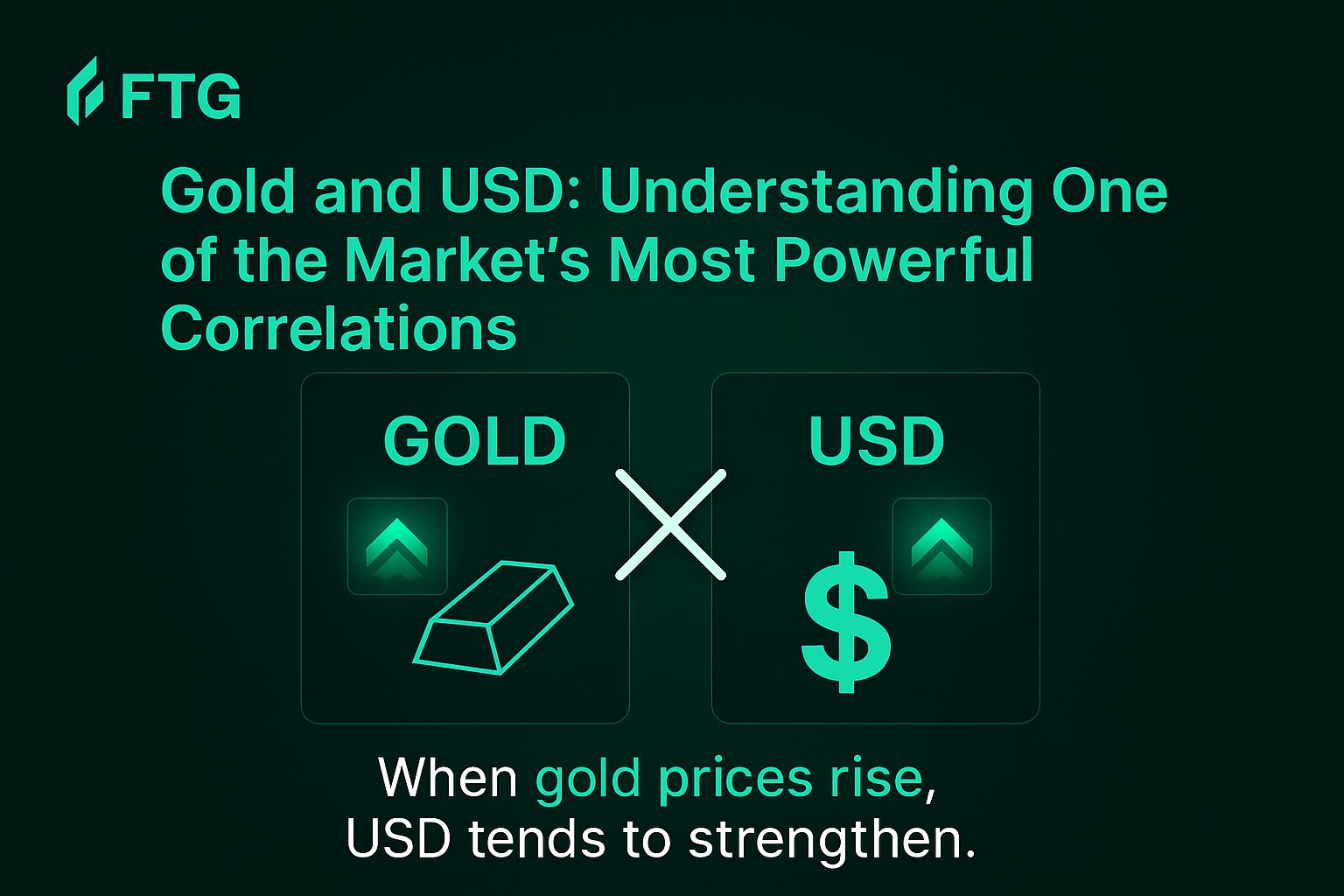
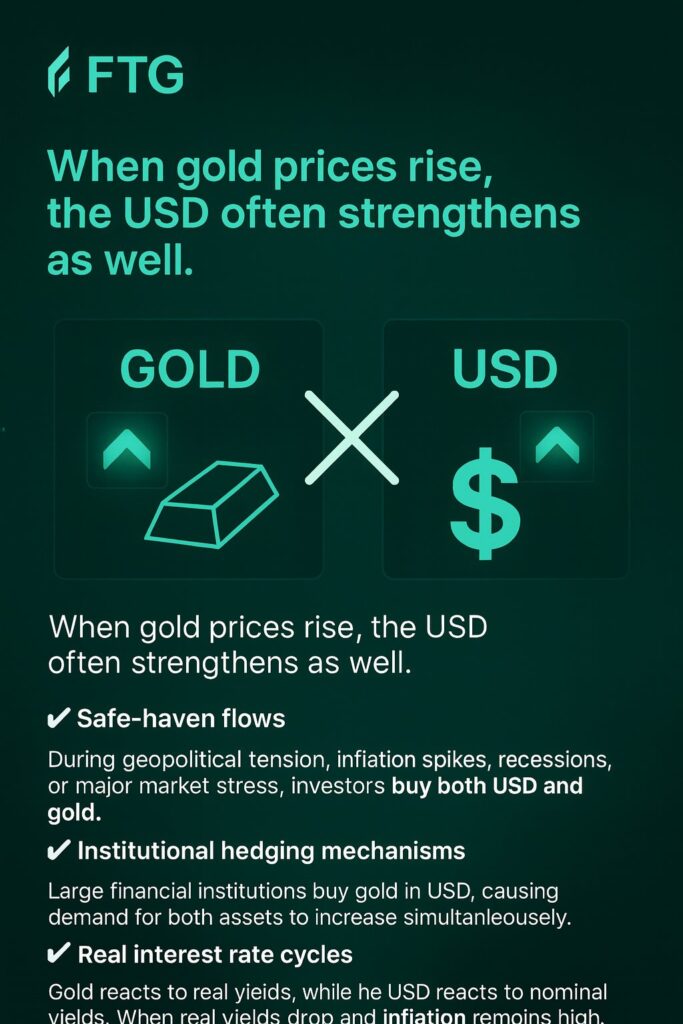
When gold prices rise, the USD often strengthens as well.
This positive correlation is driven by a combination of:
✔ Safe-haven flows
During geopolitical tension, inflation spikes, recessions, or major market stress, investors buy both USD and gold. They’re the two strongest global hedges.
✔ Institutional hedging mechanisms
Large financial institutions buy gold in USD, causing demand for both assets to increase simultaneously.
✔ Inflation expectations
High inflation or future inflation expectations push traders toward gold, while simultaneously pricing in changes in Federal Reserve policy—fueling USD strength.
✔ Real interest rate cycles
Gold reacts to real yields, while the USD reacts to nominal yields. When real yields drop and inflation remains high, both assets benefit at the same time.
This is why, in modern markets, the gold–USD correlation is often positive, not negative.
3. The Safe-Haven Effect: The Most Important Driver
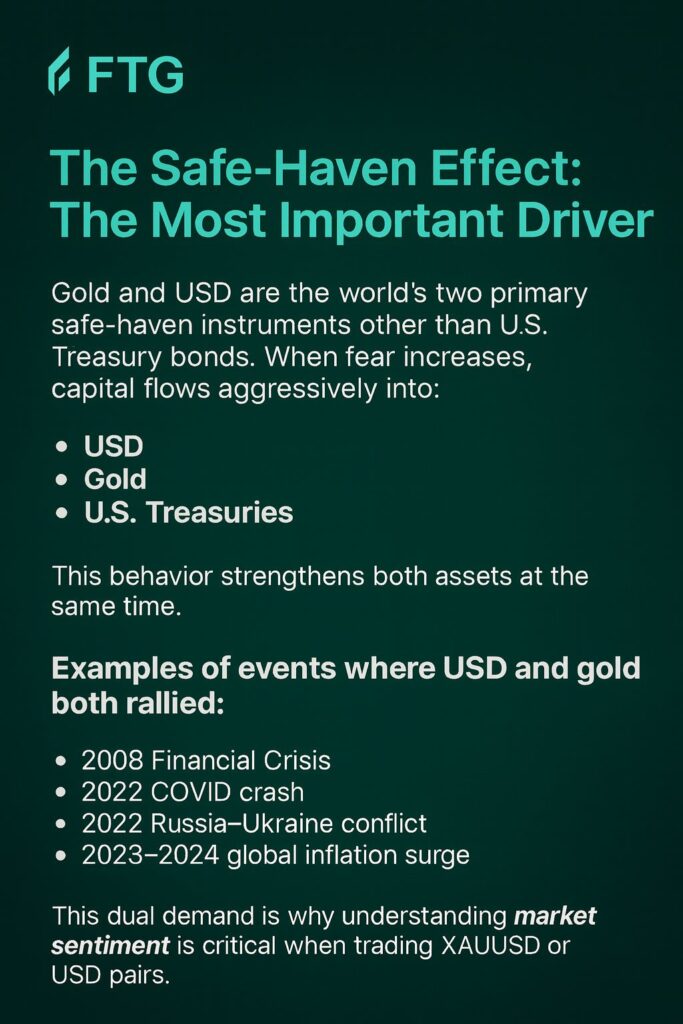
Gold and USD are the world’s two primary safe-haven instruments other than U.S. Treasury bonds. When fear increases, capital flows aggressively into:
- USD
- Gold
- U.S. Treasuries
This behavior strengthens both assets at the same time.
Examples of events where USD and gold both rallied:
- 2008 Financial Crisis
- 2020 COVID crash
- 2022 Russia–Ukraine conflict
- 2023–2024 global inflation surge
This dual demand is why understanding market sentiment is critical when trading XAUUSD or USD pairs.
4. Federal Reserve Policy and the Gold–USD Correlation
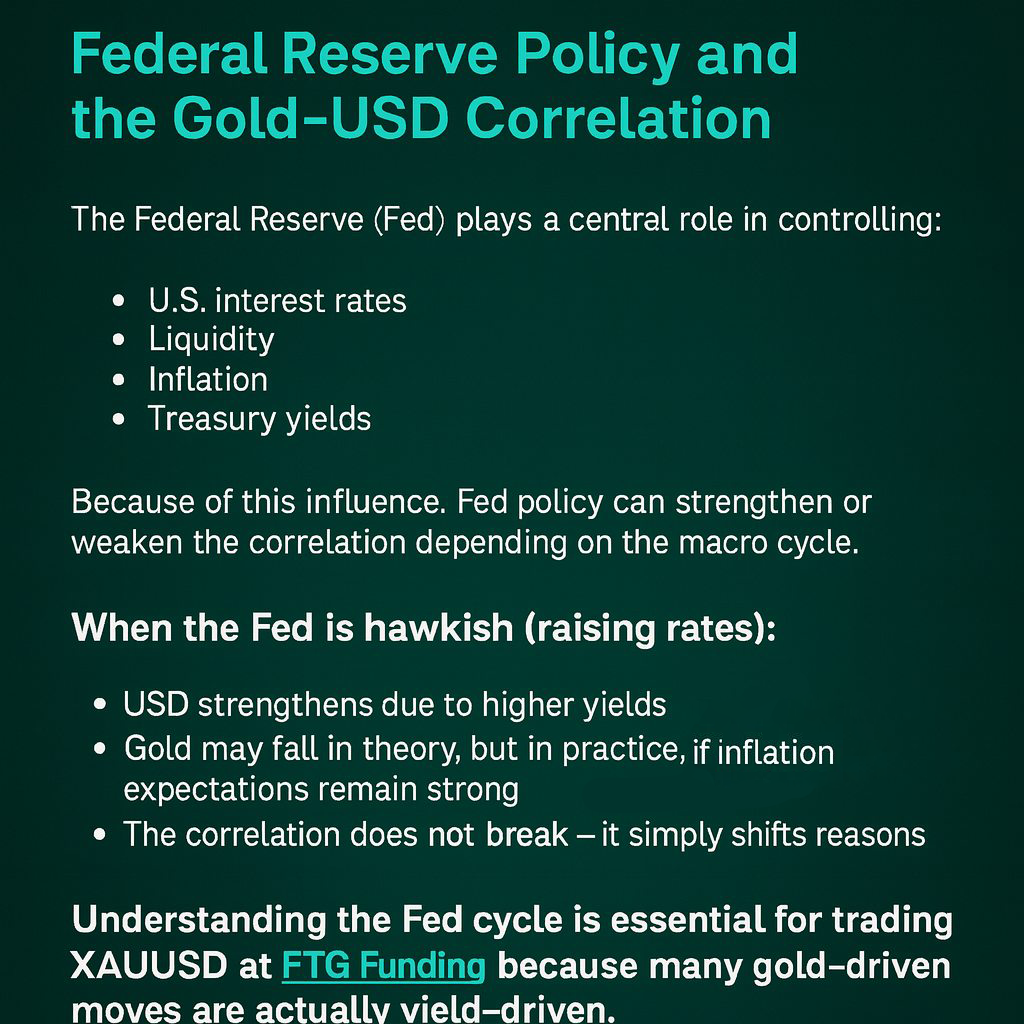
The Federal Reserve (Fed) plays a central role in controlling:
- U.S. interest rates
- Liquidity
- Inflation
- Treasury yields
Because of this influence, Fed policy can strengthen or weaken the correlation depending on the macro cycle.
When the Fed is hawkish (raising rates):
- USD strengthens due to higher yields
- Gold may fall in theory, but in practice, gold often rises if inflation expectations remain strong
- The correlation does not break—it simply shifts reasons
When the Fed is dovish (cutting rates):
- USD weakens
- Gold typically rises because real yields drop
- This can temporarily weaken the correlation, but risk sentiment still plays a role
Understanding the Fed cycle is essential for trading XAUUSD at FTG Funding because many gold-driven moves are actually yield-driven, not liquidity-driven.
5. Inflation, Real Yields, and the Modern Gold Market
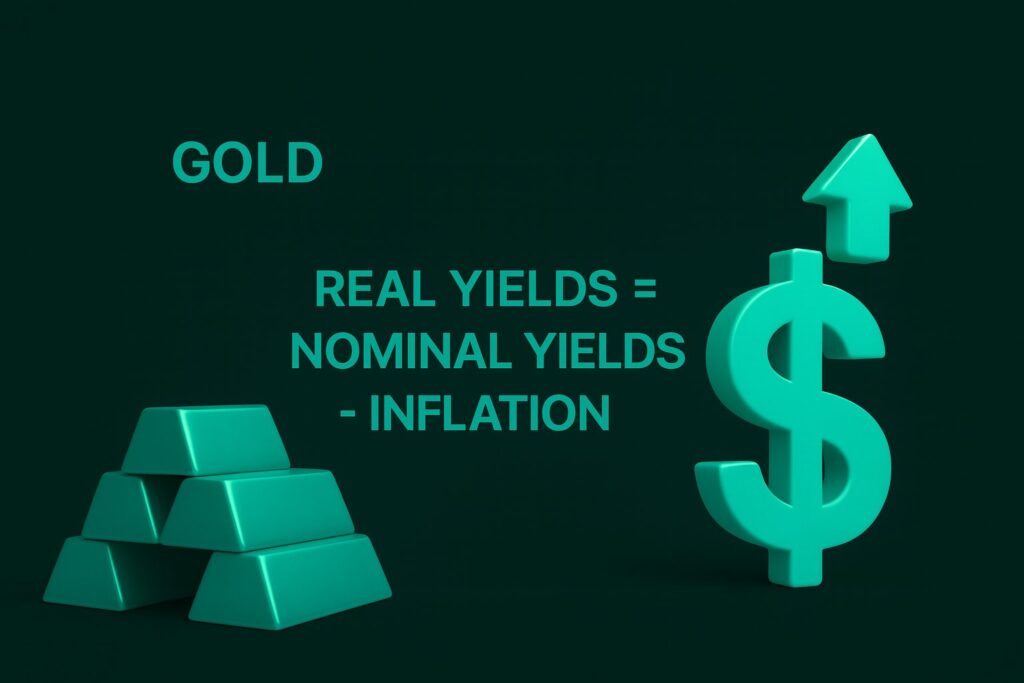
The strongest force behind gold demand is real interest rates, not nominal rates.
Real yields = Nominal yields – Inflation
When real yields drop:
- Gold becomes more attractive
- Investors protect purchasing power
- USD demand also increases from global capital inflows
This is why during high inflation cycles, both assets can rise simultaneously—something many traders misunderstand.
6. Why the Gold–USD Correlation Matters for FTG Traders
Knowing how gold and USD influence each other gives traders a major edge.
Here’s how it improves your trading performance:
✔ Improved directional bias on XAUUSD
You can quickly identify whether gold’s move is macro-driven, liquidity-driven, or simply technical.
✔ Better risk management
When gold and USD strengthen together, it often signals risk-off market conditions, meaning indices, cryptocurrencies, and high-risk currencies may fall.
✔ Avoiding false signals
Gold may rally even as USD strengthens—this does not mean the market is irrational; it means safe-haven flows dominate.
✔ Higher profitability across multiple asset classes
The Gold–USD correlation influences:
- USD pairs
- Index markets
- Metals
- Commodities
- Crypto
Understanding the relationship allows FTG traders to spot high-probability setups earlier.
7. When the Gold–USD Correlation Breaks Down
Although this is a powerful long-term correlation, it is not perfect. Traders must be aware of conditions that weaken or reverse the relationship:
Conditions that weaken the correlation:
- Strong risk-on environment (stocks rallying, volatility low)
- Major Fed policy shifts (unexpected rate cuts or hikes)
- Sudden spikes in Treasury yields
- Isolated gold demand (central bank bulk purchases)
- Extreme inflation with deflationary expectations
- Liquidity-driven reversals during NFP, CPI, FOMC
The correlation does not disappear—it simply adjusts to the macro cycle.
8. How FTG Traders Can Apply This in Real Trading
Here are actionable insights for FTG Funding traders:
1. Combine gold and USD behavior for bias
If both are rising → risk-off → look for shorts on indices and risk currencies.
2. Watch real yields, not just USD strength
Gold responds more to real yields than to the dollar itself.
3. Use the correlation for XAUUSD stop placement
Risk-off environments produce sharper spikes → wider buffers recommended.
4. Pay attention to U.S. macro data
CPI, NFP, PCE, and FOMC dramatically influence both assets simultaneously.
Conclusion
The Gold–USD correlation is one of the most powerful and reliable relationships in global financial markets. Unlike outdated teaching that gold simply moves inversely to USD, modern macroeconomic cycles show a clear pattern:
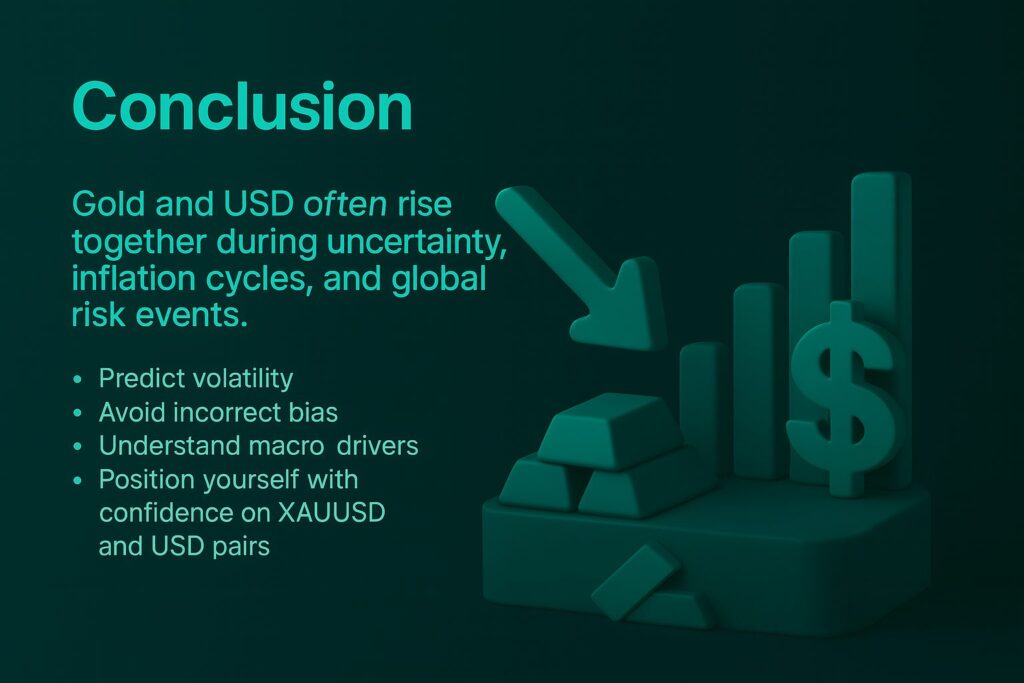
Gold and USD often rise together during uncertainty, inflation cycles, and global risk events.
For FTG Funding traders, understanding this correlation is not optional—it’s a competitive advantage.
It helps you:
- Predict volatility
- Avoid incorrect bias
- Understand macro drivers
- Position yourself with confidence on XAUUSD and USD pairs
Trading is not just about charts.
It’s about understanding what moves the market behind the chart.
Master this correlation, and you elevate your trading edge at FTG significantly.